Sustainability and responsibility in office space design
In modern workplace design, ecological and ethical perspectives have risen to a central position. Sustainable solutions in space design mean not only minimizing environmental impacts but also considering human well-being and economic viability. When these considerations are successfully implemented, it creates office spaces that serve their users, the environment, and business operations better far into the future.
What does responsibility in office space design mean in practice?
Responsible space design is built on three key dimensions: ecological, social, and economic sustainability. Ecologically sustainable office spaces address carbon footprint reduction through energy-efficient solutions, circular economy principles, and environmentally responsible material choices that are durable and recyclable. Social responsibility is reflected in spaces that support the well-being, health, and sense of community of diverse users, while promoting accessibility and inclusivity for all. Economic sustainability, in turn, refers to long-lasting, adaptable solutions that optimize operational efficiency and deliver cost savings over the long term.
Practical examples of responsibility-oriented approaches to office space design
-
Multi-purpose, modular, and convertible furniture solutions that adapt to different needs and user groups
-
Designing shared spaces for interaction alongside quiet zones for focused work
-
Using local, recyclable, and durable materials to reduce environmental impact
-
Incorporating energy-efficient systems and smart building technologies
-
Applying biophilic design to bring natural light, plants, and natural materials into interiors
-
Creating accessible, inclusive spaces that support well-being and a sense of community
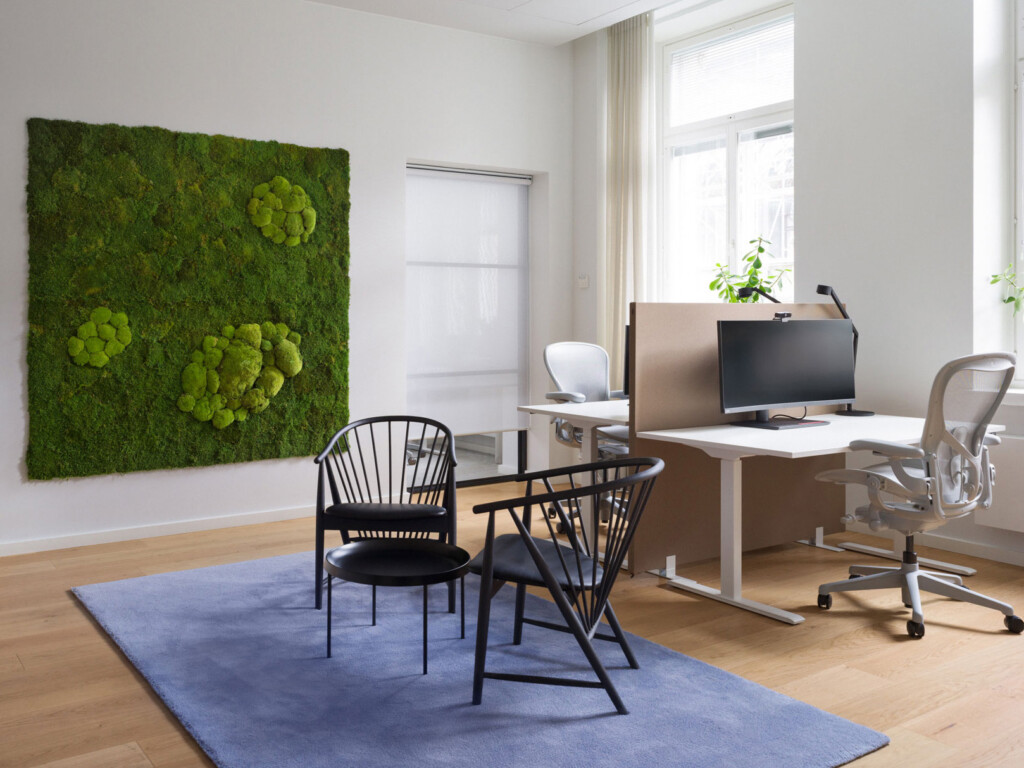
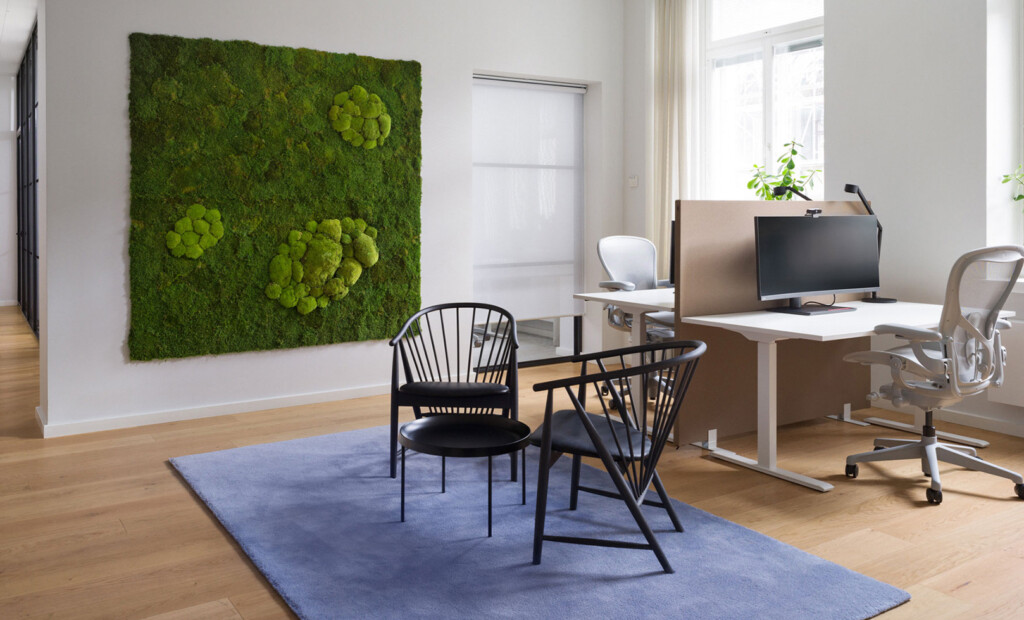
Green walls are popular in office space design.
How does following sustainable development principles affect material choices?
Material choices play a central role in sustainable space design. As environmental awareness has grown, there has been a shift toward favoring materials whose total environmental burden throughout their entire lifecycle is as small as possible. This means paying attention to the origin of raw materials, manufacturing processes, service life, and recyclability.
Circular economy principles guide material choices toward reusable, repairable, and recyclable alternatives. In sustainable space design, it is essential to consider the entire lifecycle of materials already in the design phase. For example, certified wood materials, recycled composites, and bio-based materials have gained popularity.
Practical tips for more responsible material solutions:
- Choose locally produced materials to minimize transportation emissions
- Favor materials with environmental certifications
- Consider recycled and reusable materials
- Choose long-lasting and timeless materials that don’t require frequent replacement
- Pay attention to the maintainability and repairability of materials

Our own material library at Amerikka Design Office is color-coded so that selecting responsible materials and calculating carbon footprints is easier and faster.
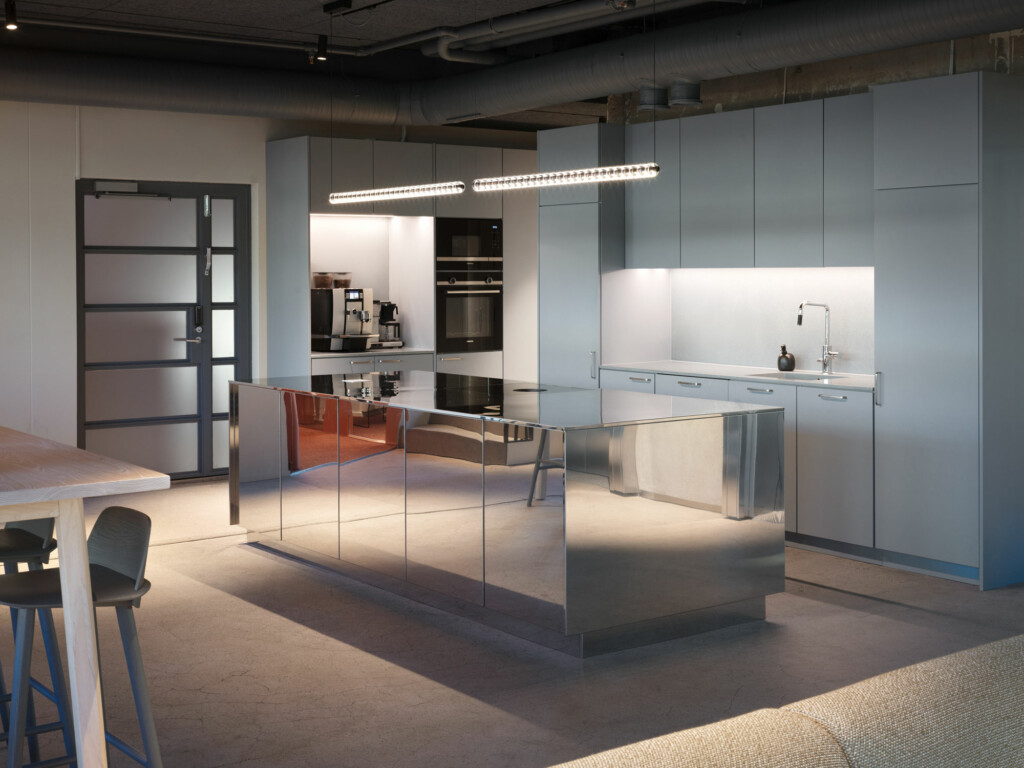
Amerikka’s office stunning island is made from recycled steel that stands the test of time.
How is energy efficiency considered in office space design?
Energy-efficient solutions form one of the most central ways to reduce the environmental burden of office spaces. In the design of lighting, heating, and ventilation, special attention is now paid to optimizing energy consumption.
LED lighting, motion sensors, and smart lighting controls can significantly reduce lighting energy consumption compared to traditional technology. Heating and cooling system sensors and automation, in turn, ensure that energy is used only when needed and in the right amounts.
Smart systems collect and analyze data on space usage and conditions, enabling real-time monitoring and optimization of energy consumption. For example, presence-based ventilation control and automation of heating and lighting can bring significant cost savings while reducing environmental impacts. A well-designed energy-efficient office space can reduce energy costs without compromising user experience.
What benefits do responsibly designed office spaces bring to companies?
Sustainable solutions in space design don’t just reduce environmental burden but also bring concrete business benefits. Energy-efficient systems and sustainable material choices can bring long-term cost savings in the form of reduced energy costs and longer material service life.
Biophilic design principles-based designed spaces affect employee experience. Bringing natural elements into the work environment has been estimated to reduce stress, improve concentration, and may even reduce sick leave. This is directly reflected in improved work efficiency and better job satisfaction.
Responsibly implemented spaces also strengthen company brand and serve as concrete proof of the company’s values. This is a significant competitive advantage in recruitment, as especially younger generations value employers’ environmental awareness and responsibility.
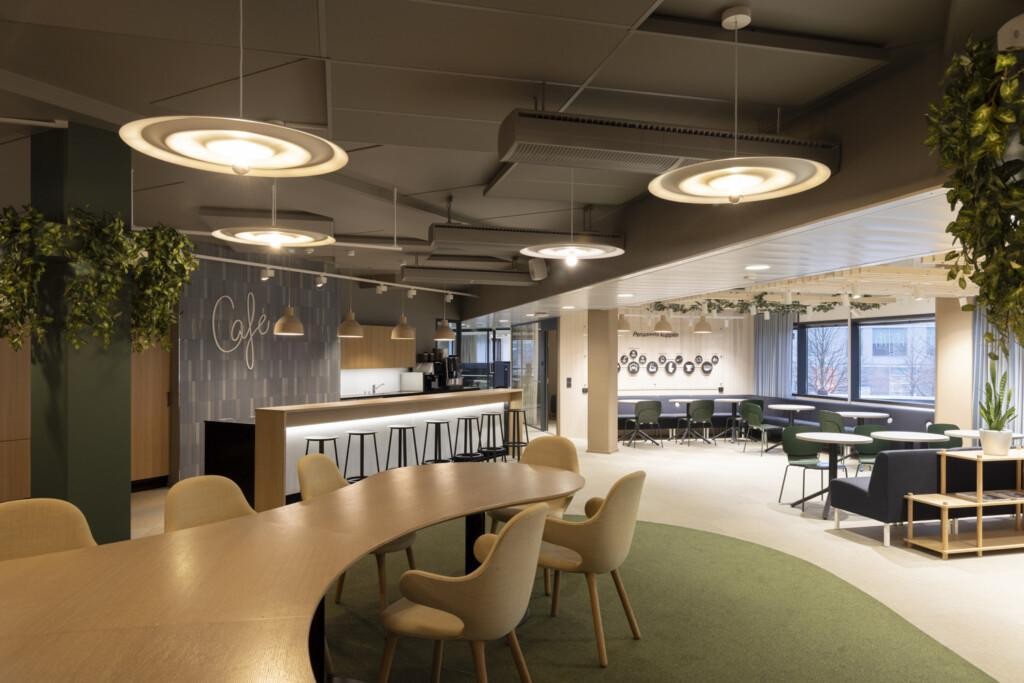
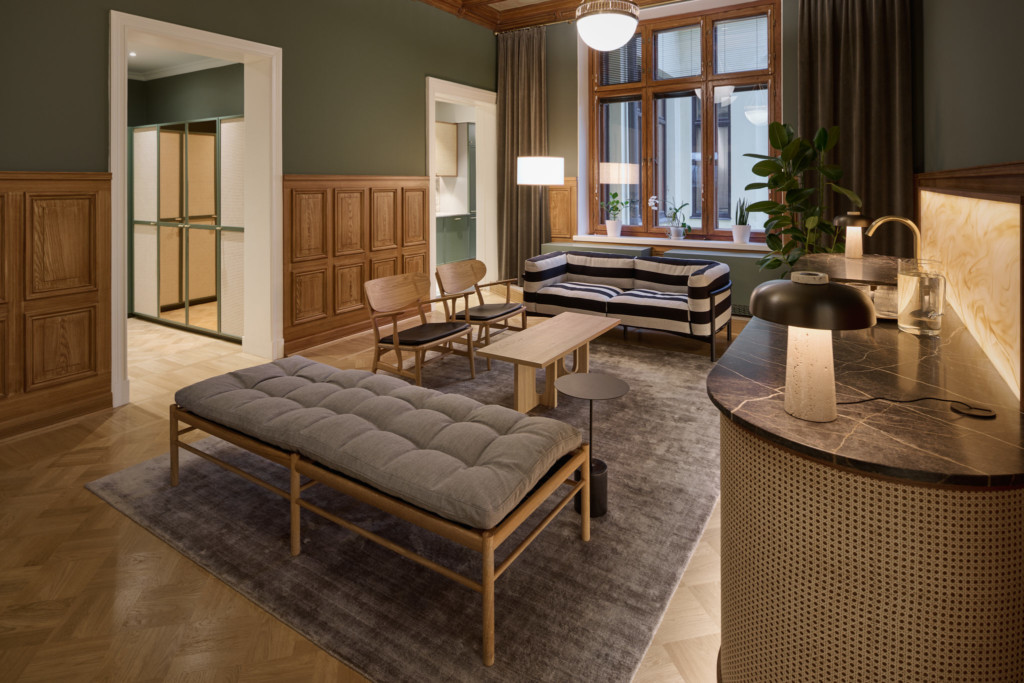
In our client’s office spaces, community and circular economy played central roles – approximately 70% of the furniture is recycled.
What are the most common challenges in implementing sustainable office spaces?
Implementing responsible space solutions sometimes faces particularly economic challenges. Initial investments are often higher than traditional solutions, which can become an obstacle especially for smaller companies. Although lifecycle costs would be lower, long-term thinking often requires a conscious decision to prioritize sustainability over immediate cost savings.
In older buildings, technical limitations can complicate the installation of energy-efficient systems or structural changes. In such cases, compromises may need to be made between optimal solutions and practical implementation possibilities.
A phased approach serves as a solution to these challenges, where quality from a responsibility perspective is improved step by step. For example, updating an old office can begin with renewing lighting and continue later with broader structural changes. Collaboration with an expert design firm also helps find cost-effective solutions, as designers can consider the project’s special characteristics.
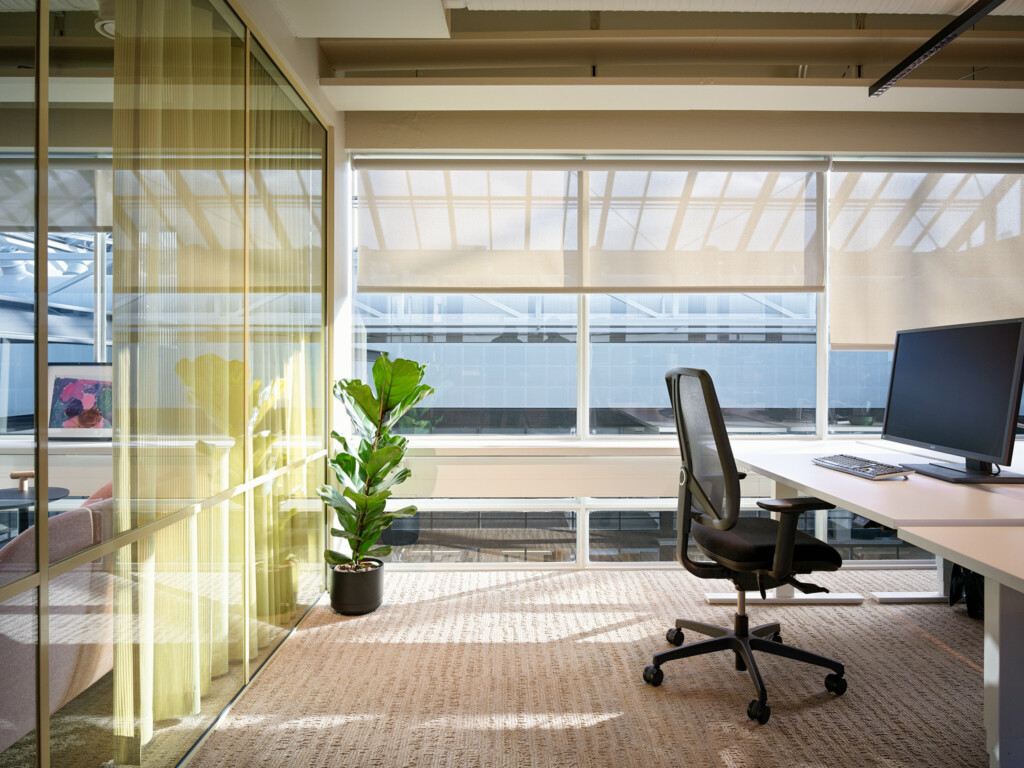
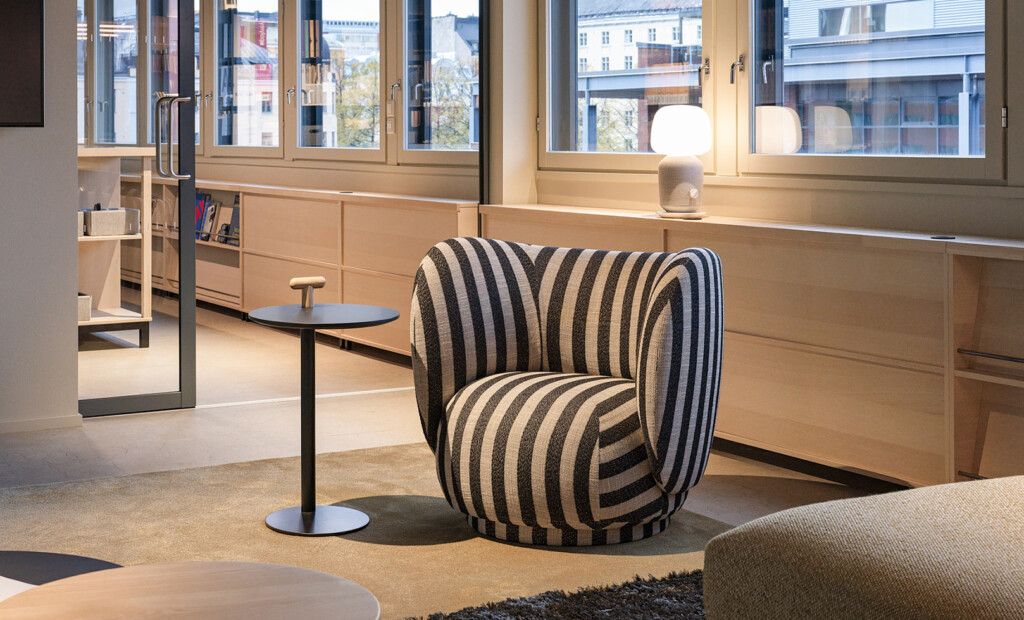
Natural light increases workplace well-being. Amerikka’s office glass walls are reused with new framing.
Future trends in responsible space design
The future of space design looks increasingly responsible. New technological innovations, such as advanced materials and smart systems, enable even more efficient and environmentally friendly solutions.
Circular economy will be emphasized even more in future space design. We believe that designing products from the start to be reusable, minimizing waste, and recycling materials will become increasingly central parts of the design process.
The importance of well-being-supporting space solutions will grow as understanding of the workplace environment’s impact on employee health and productivity increases. Biophilic design principles, which bring natural elements into the work environment, will become more widespread and develop further.
The significance of various sustainable development quality-mapping certifications, such as LEED, BREEAM, and WELL, will likely be emphasized even more. These standards guide design and provide objective metrics for assessing responsibility.
___________________________________________________________
Does your project need development? Please don’t hesitate to contact us regardless of your project size, and we’ll think together about the best solution for your specific needs!