5 Tips for planning a new office space
Workplace design has tremendous significance for both company operations and employee satisfaction. A well-designed office space supports the company’s strategic goals, communicates values, and increases work efficiency. According to research, people working in functional work environments can be more productive and significantly more committed to their employer.
Modern work environments are not just a place for work, but a strategic tool that can solve many challenges of contemporary work life. But how can you ensure that a new office space meets your company’s specific needs while considering sustainability and the changing demands of work life?
Office space planning is an investment in the future
A quality work environment is much more than an expense – it is an investment that pays for itself many times over. A well-designed office space reduces sick leave, enhances collaboration, and helps attract the best talent. At its best, the space serves as the company’s business card, communicating brand values and culture to both external visitors and internal staff.
In modern workplace design, urban planning and sustainable development are increasingly prominent. The office space is not viewed as an isolated unit but as part of the broader urban environment. A sustainably designed work environment considers material choices, energy efficiency, and space versatility in a way that serves both the environment and users. When office space is planned with long-term sustainability in mind, it adapts to the company’s changing needs for years to come.

Amerikka’s own office utilization rate improved when moving to new premises.
1: Define clear goals and needs
The foundation of successful office space planning is careful needs assessment. What activities take place in the space? How do employees work? How much mobility does the work involve? Answering these questions helps create an office space that genuinely supports work. In addition to determining the amount of space needed, it is essential to define what different types of spaces and functions are required in the work environment.
Setting concrete goals guides the planning process and helps measure its success. Goals might include improving employee satisfaction, increasing collaboration between departments, or reducing carbon footprint. Budget and timeline are also essential limiting factors, but they should be viewed as an investment: a 10% more expensive solution can deliver 50% better results in the long run.
Questions to consider:
– What activities happen in the space daily, weekly, and monthly?
– How many different working styles exist in the organization?
– What are the three most important goals you want to achieve through new space planning?
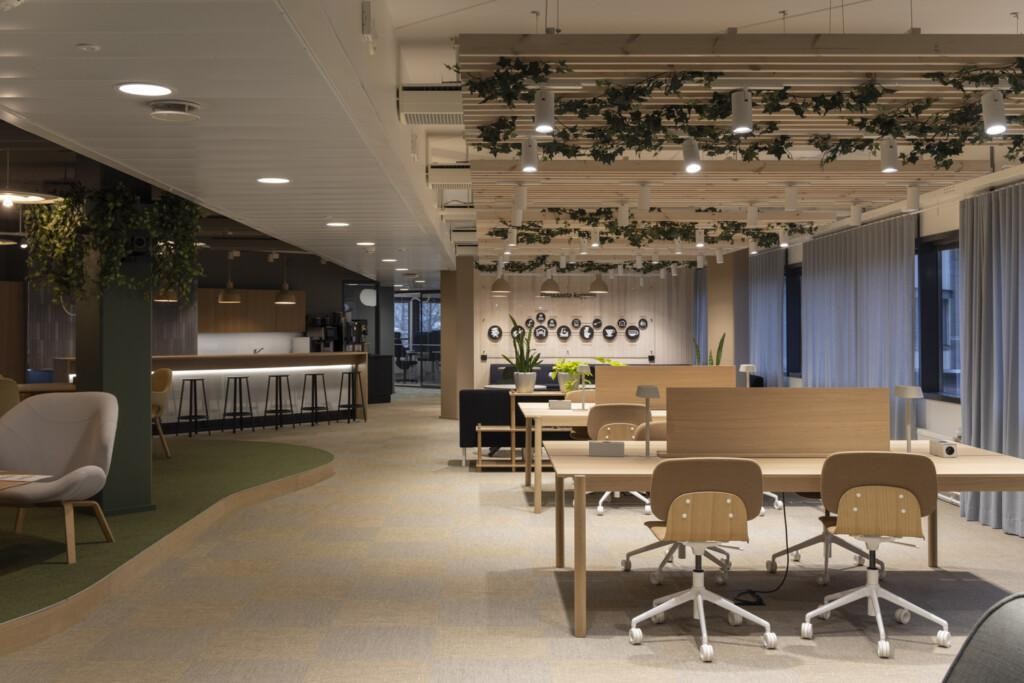
In a Helsinki-based expert office, the focus is on an employee hub, around which a four-winged office with meeting areas is arranged
2: Consider your company’s brand and culture
The office space is your company’s three-dimensional business card that communicates your values and identity. When the space’s appearance reflects your company’s personality, it strengthens your brand in the eyes of both external visitors and your own staff. Successful space planning supports company culture and creates a framework for the desired way of working.
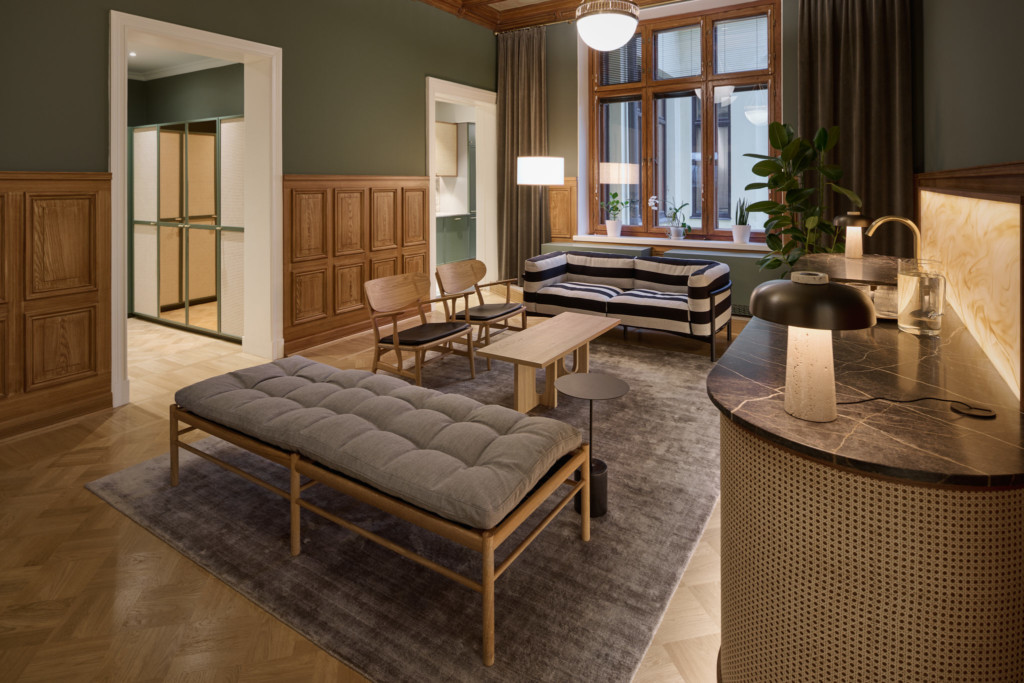
Colors, materials, and spatial solutions are not just aesthetic choices – they significantly affect how it feels to work in the space. For example, a technology company might emphasize innovation and dynamism with open spaces and bold color choices, while a more traditional company organization might value dignity and concentration-supporting calm elements. At its best, the space makes the company’s values visible and experiential.
Psychological effects of colors in work environments:
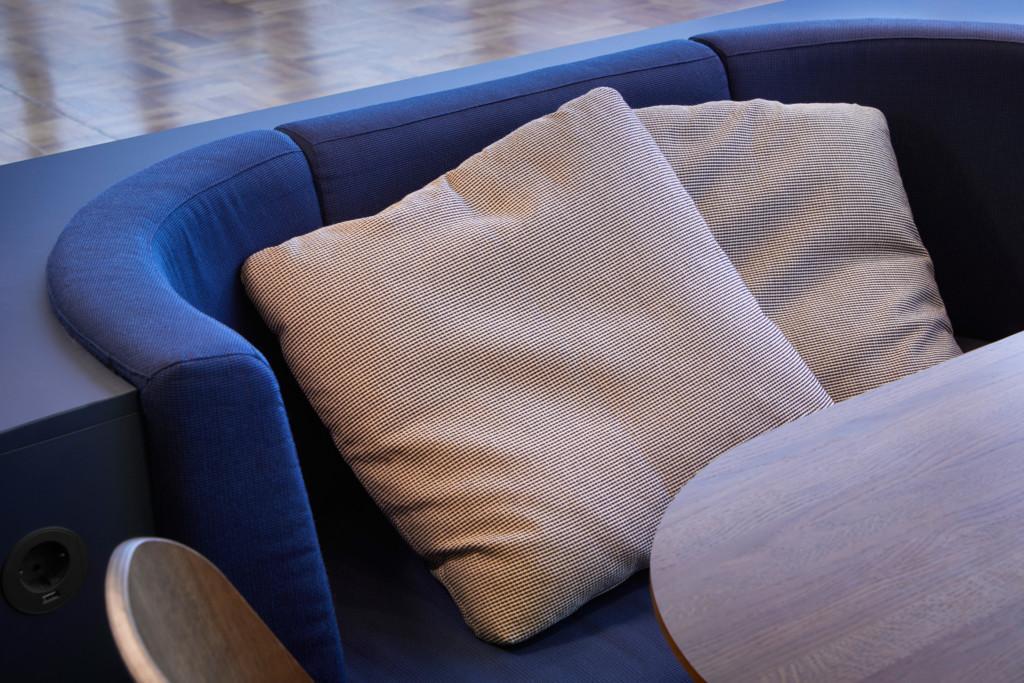
- Blue – promotes concentration and calmness
- Green – reduces stress and connects to nature
- Yellow – increases creativity and optimism
- Red – energizes and stimulates
3: Create flexible and multipurpose spaces
The hallmark of a modern work environment is flexibility. Activity-based working offers different spaces for different needs: individual work requiring concentration, teamwork, confidential conversations, and social interaction. A flexible spatial solution gives employees the opportunity to choose the most suitable environment for each work task throughout the day.
Convertible furniture solutions and movable space dividers enable the space to adapt to different situations and needs. In today’s workplace design, it is essential to also consider hybrid work requirements: how does the space support both on-site and remote workers and their collaboration? Functional hybrid solutions require investment in technology, acoustics, and space equipment.
From a sustainability perspective, flexible spaces are also an ecological choice. When spaces serve multiple purposes, unnecessary construction is avoided and space utilization improves. For example, a meeting room can also function as a quiet workspace when not reserved, or a break room can transform into an afterwork event venue after the workday.
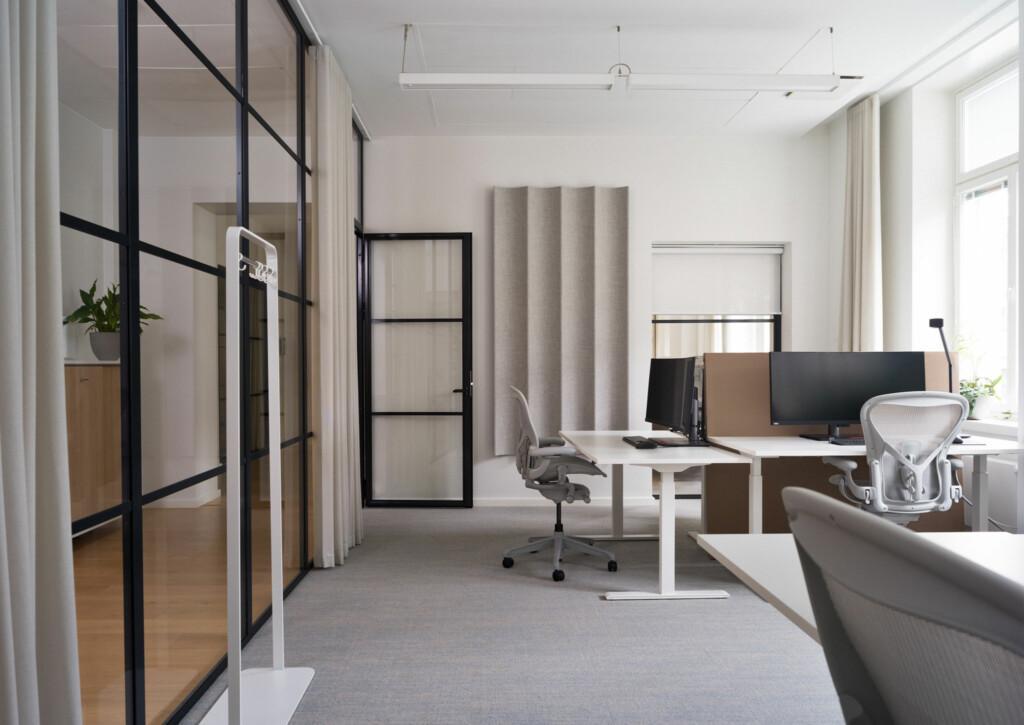
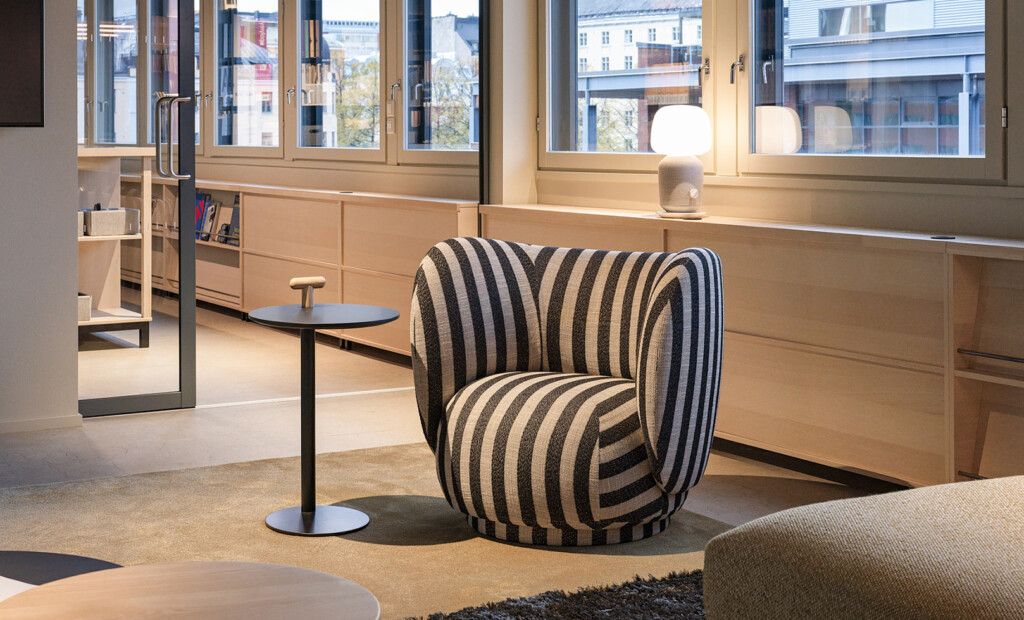
Glass walls are a stylish and functional way to divide spaces without making them closed or cramped. Office space in Helsinki.
4: Invest in ergonomics and well-being
The work environment directly affects employees’ physical and psychological well-being. Ergonomic furniture, quality lighting, and good indoor air are an essential part of a functional work environment. They are not luxury but necessity that pays for itself through reduced sick leave and improved work efficiency.
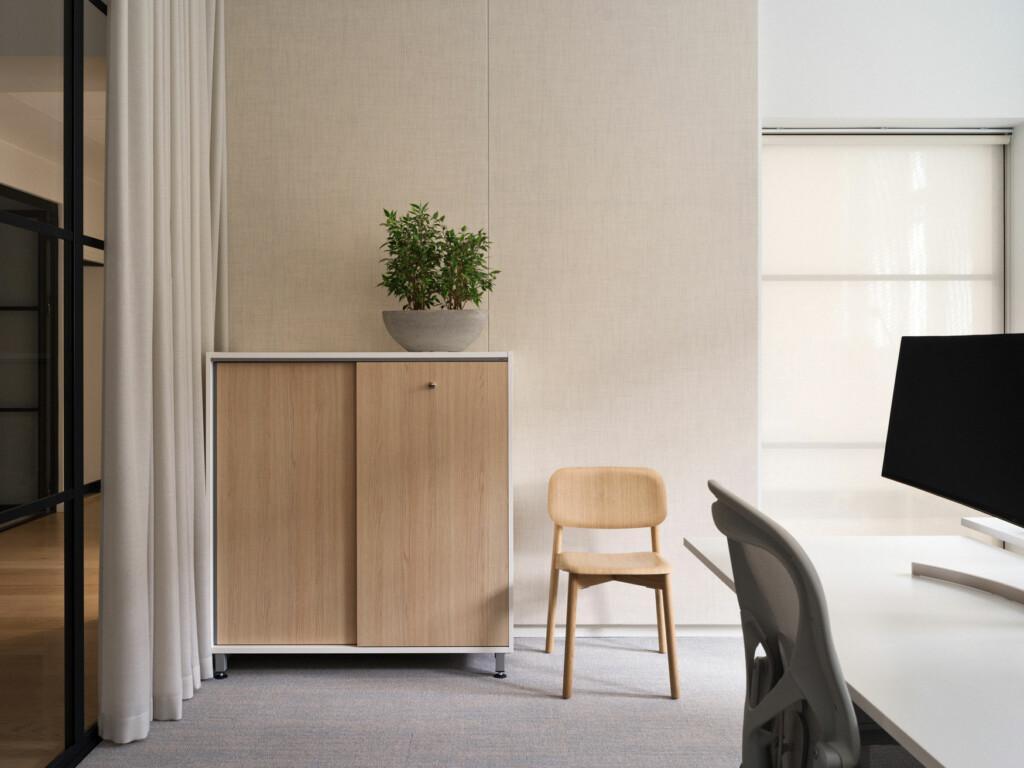
Acoustics is one of the most significant quality factors in work environments, whose importance is often noticed only when it is inadequate. A good sound environment supports concentration and reduces stress. Acoustic solutions can be integrated into spaces without compromising style through wall surfaces, furniture, and space dividers.
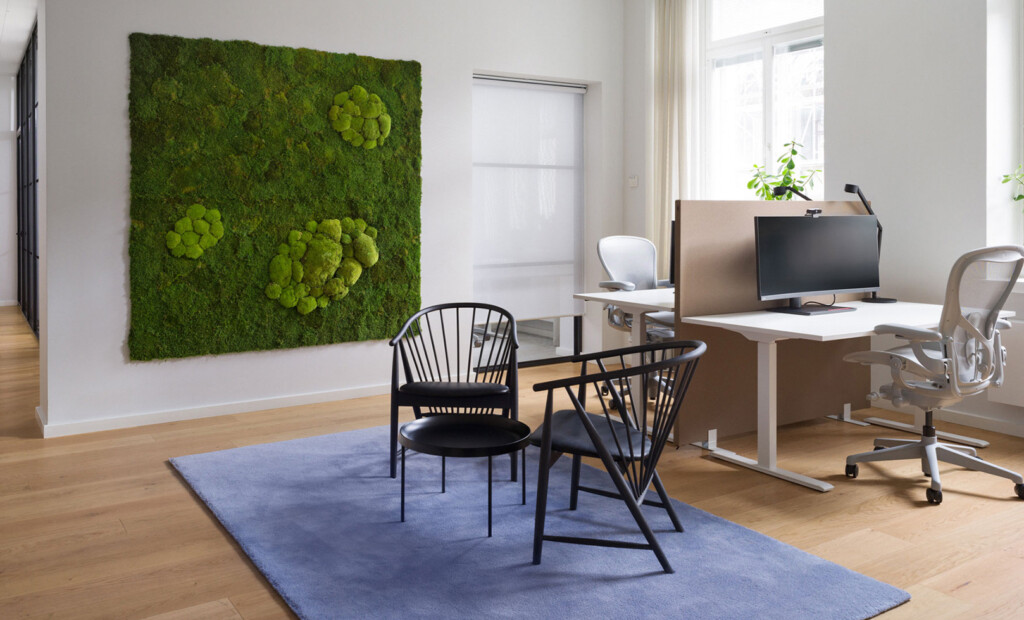
Bringing natural elements into the work environment – biophilic design solutions – is a growing trend based on strong research evidence. Plants, natural light, natural materials, and even nature views or nature images improve well-being, increase concentration ability, and reduce stress. These can bring the best aspects of urban planning into interior spaces and strengthen sustainability principles in a concrete way.

Acoustic walls can also serve as an element of interior design. Office in Helsinki.
5: Choose a skilled design partner
Workplace design is a complex whole that requires expertise from multiple fields. Working with a professional saves time, money, and nerves. An experienced designer can anticipate needs you might not have thought of, knows industry best practices, and can avoid typical pitfalls.
What kind of partner should you look for? References from similar projects demonstrate experience and competence. Equally important is finding a designer who listens to your needs and understands your company’s values and goals. A good design partner challenges your views constructively, brings new ideas to the table, and can justify their solutions.
The design process can include many stages from needs assessment and analysis to concept design and detailed implementation plans. During the process, various tools can be utilized such as workplace surveys, space usage monitoring, and user workshops. A skilled partner also knows how to manage the project so that schedule and budget hold.
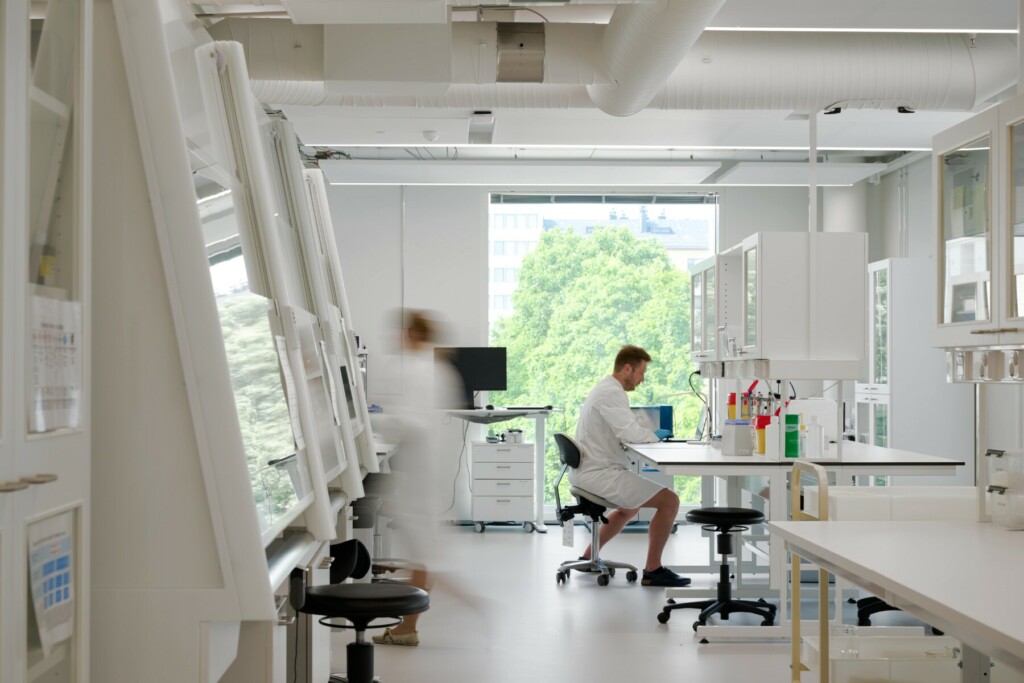
GlucoModicum headquarters and laboratories merged into a functional whole in Hakaniemi’s Lyyra.
______________________________________________
Does your project need development? Please feel free to contact us regardless of your project size, and we’ll think together about the best solution for your specific needs!