Restaurant Design
Restaurant Taulu
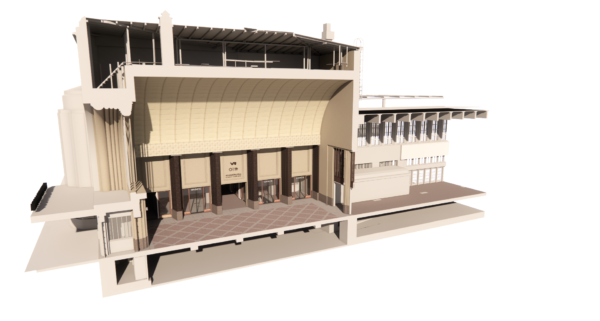
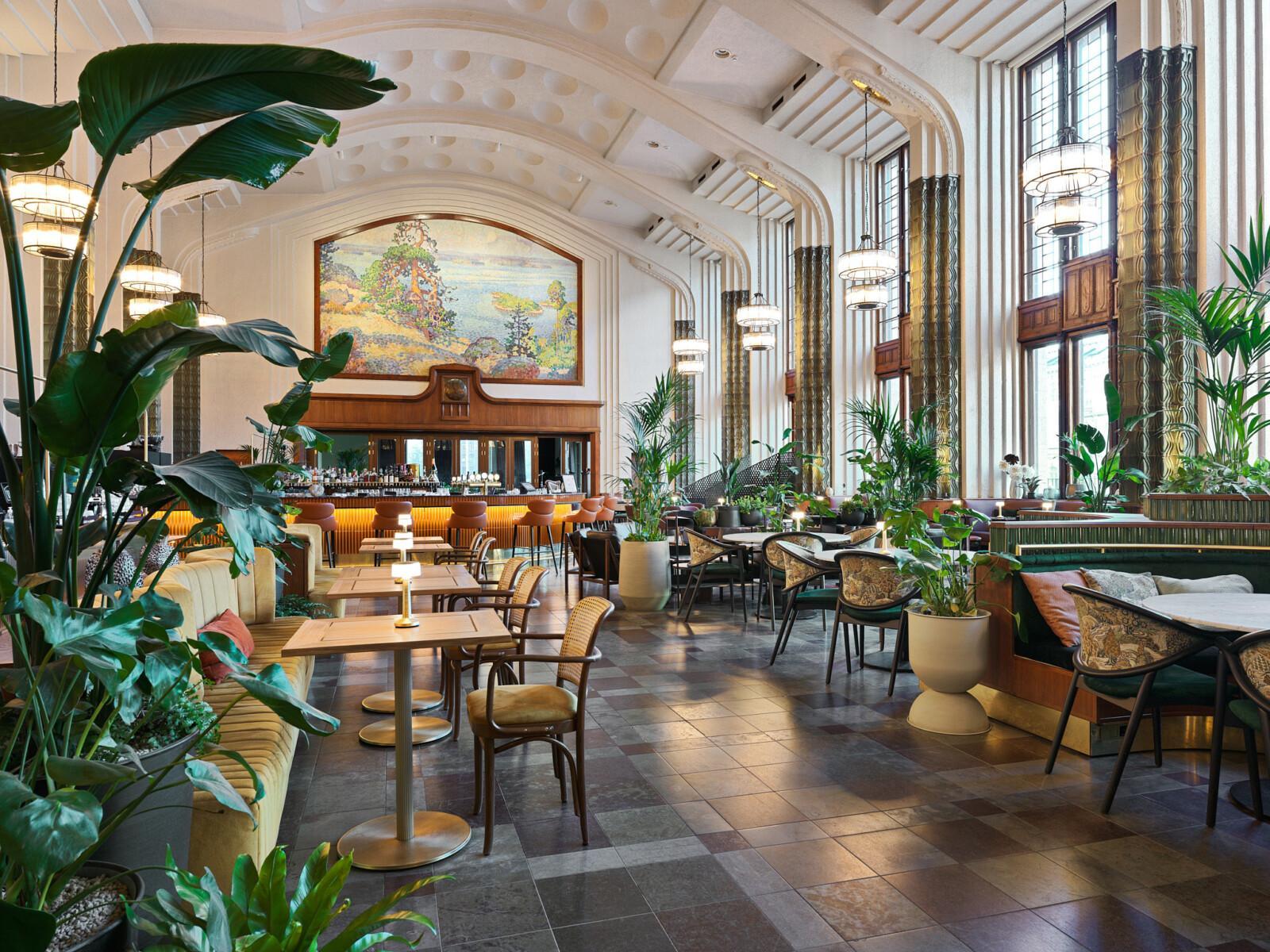
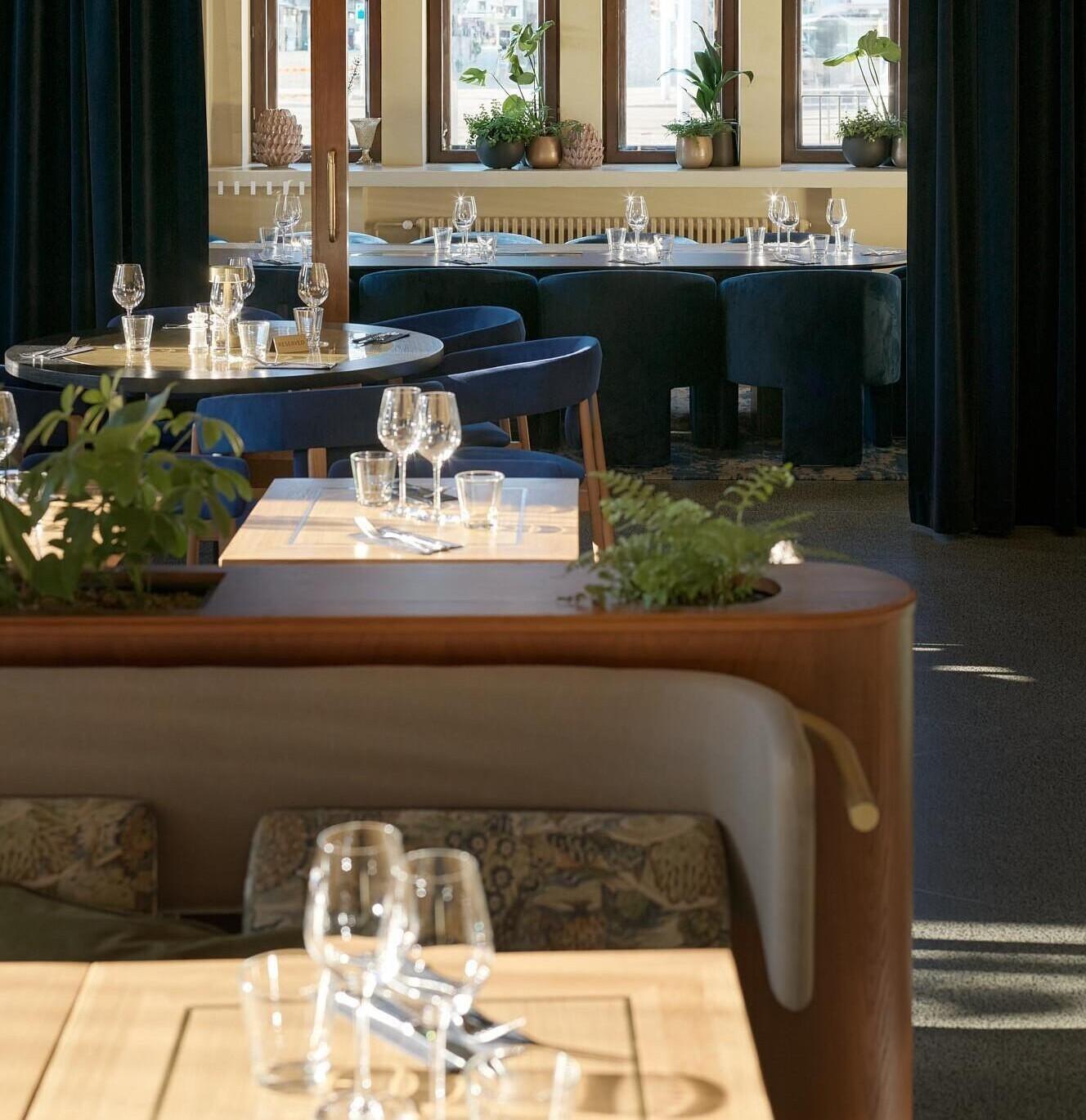
In the renewal of Restaurant Taulu, the historic setting meets the present day with subtle refinement. The objective of the interior design was to create a space that feels approachable, atmospheric, and richly layered. The result is a cohesive whole where architecture, art, and functionality are seamlessly intertwined.
“A key part of the restaurant experience is the atmosphere, often shaped by the interior, architecture, and overall ambience. At Taulu, this aspect is truly five-star worthy”
★★★★★
-Helsingin Sanomat
A Lobby for the City
Eliel Saarinen envisioned Helsinki Central Railway Station as a gateway to the city. The concept for Restaurant Taulu continues this idea – if central Helsinki were a hotel, Taulu would serve as its lobby.
The ambition was to create a place where people can drop in for a morning coffee, a glass of wine, or an evening out without any particular occasion. The atmosphere draws inspiration from the lobby bars of old Central European hotels – places where locals, travellers, and passersby naturally come together in the same space.
A Landscape from Koli
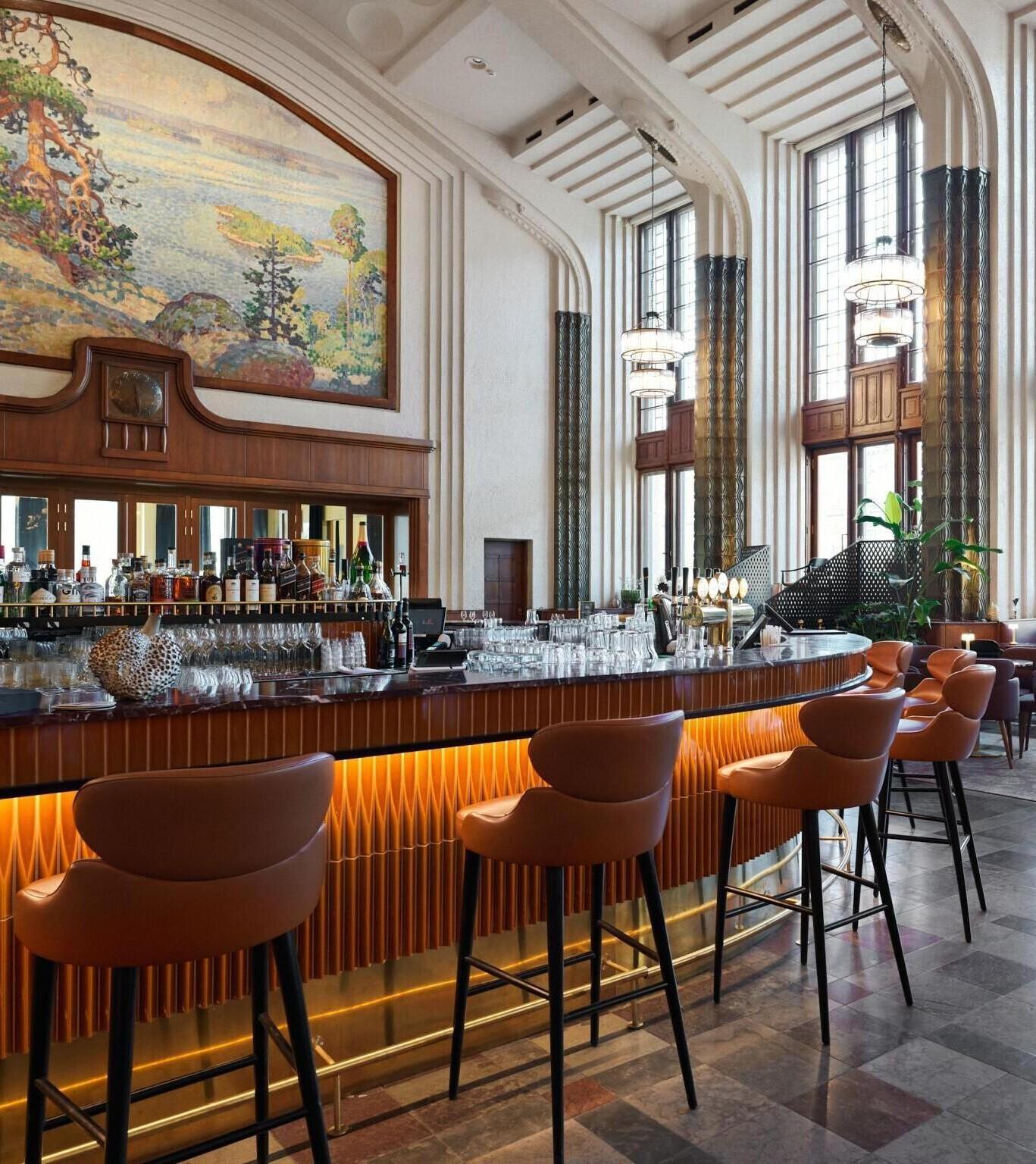
At the heart of the design – and the source of the restaurant’s name – is the preserved and luminously glowing Maisema Kolilta painting by Eero Järnefelt, A. W. Finch, and Ilmari Aalto. Rather than being treated as a standalone artwork, the painting was integrated into the spatial experience as a whole.
A carefully framed sightline through the central space emphasises the painting’s role as the visual focal point of the interior. The colour palette of the restaurant also draws directly from the artwork: its tones are reflected in the upholstery fabrics, particularly within the restaurant area where shades of blue play a prominent role.
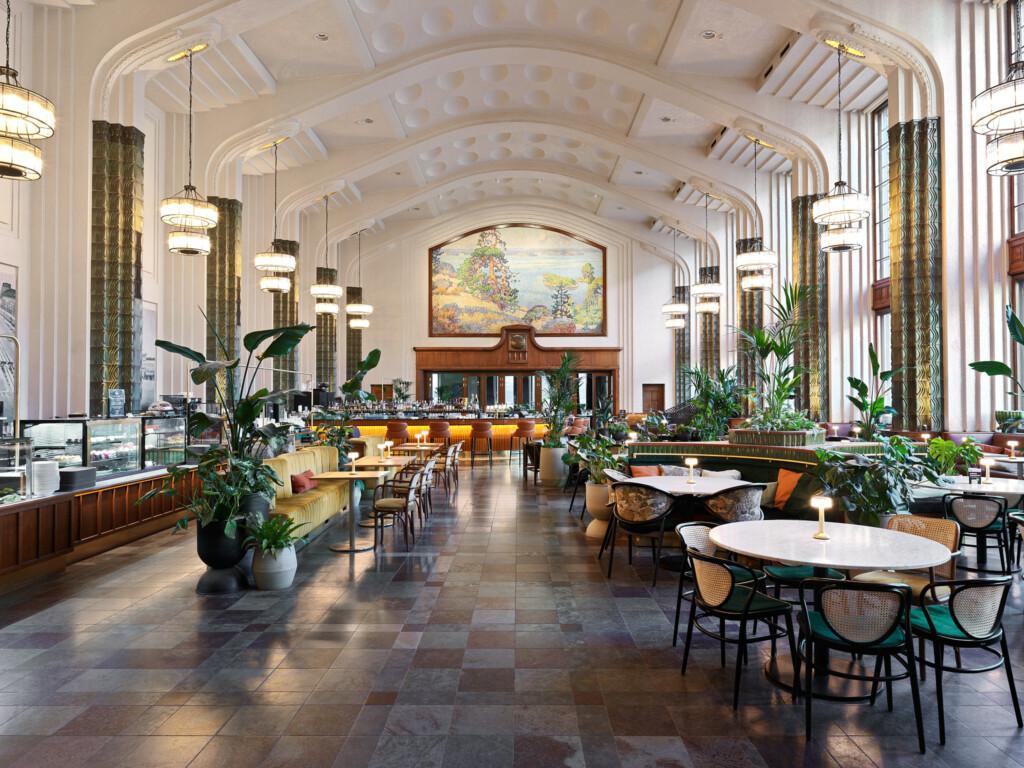
”The result is exactly what we were aiming for.
Taulu has become Helsinki’s lobby.”
– Sami Karranto / Helsingin asemaravintolat Oy
Three Zones, One Cohesive Experience
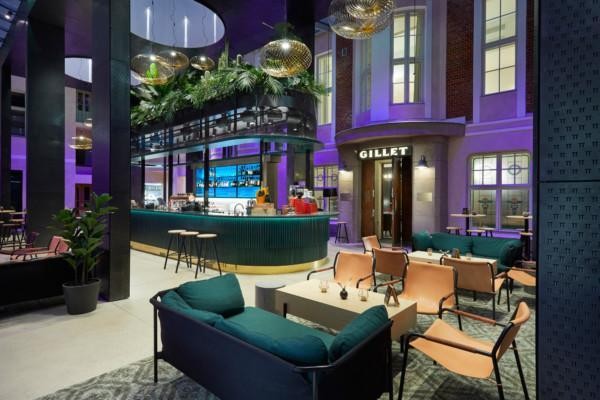
The restaurant concept is built around three interconnected functional zones – a café, a bar, and an à la carte restaurant – allowing guests to move seamlessly from one atmosphere to another.
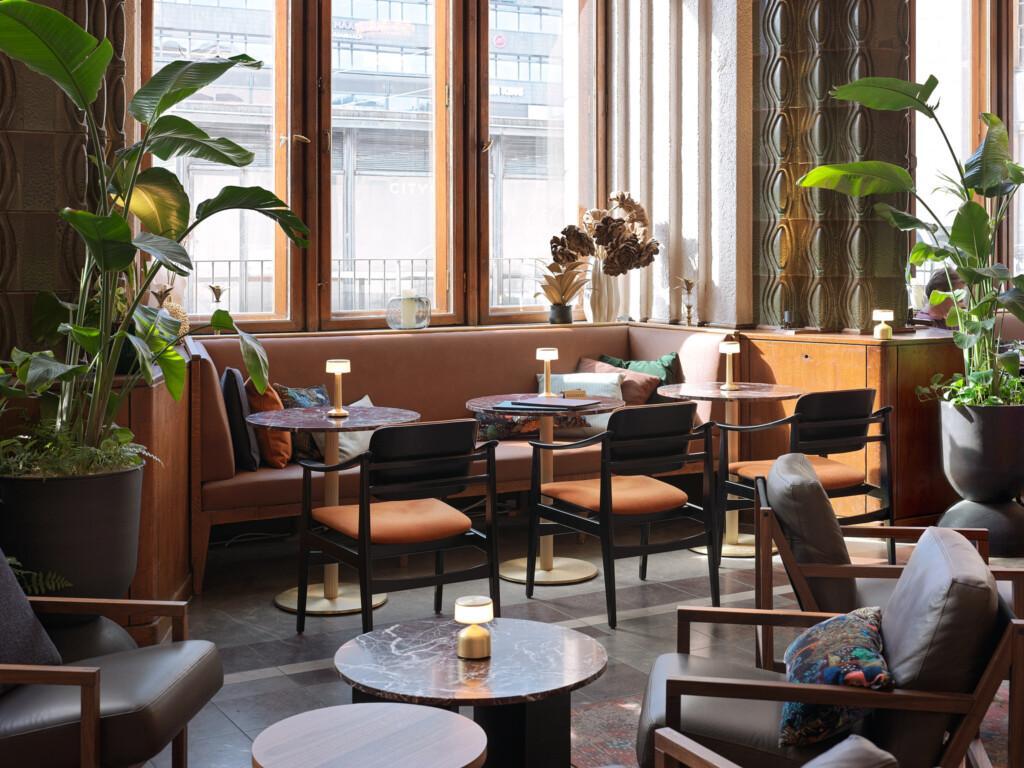
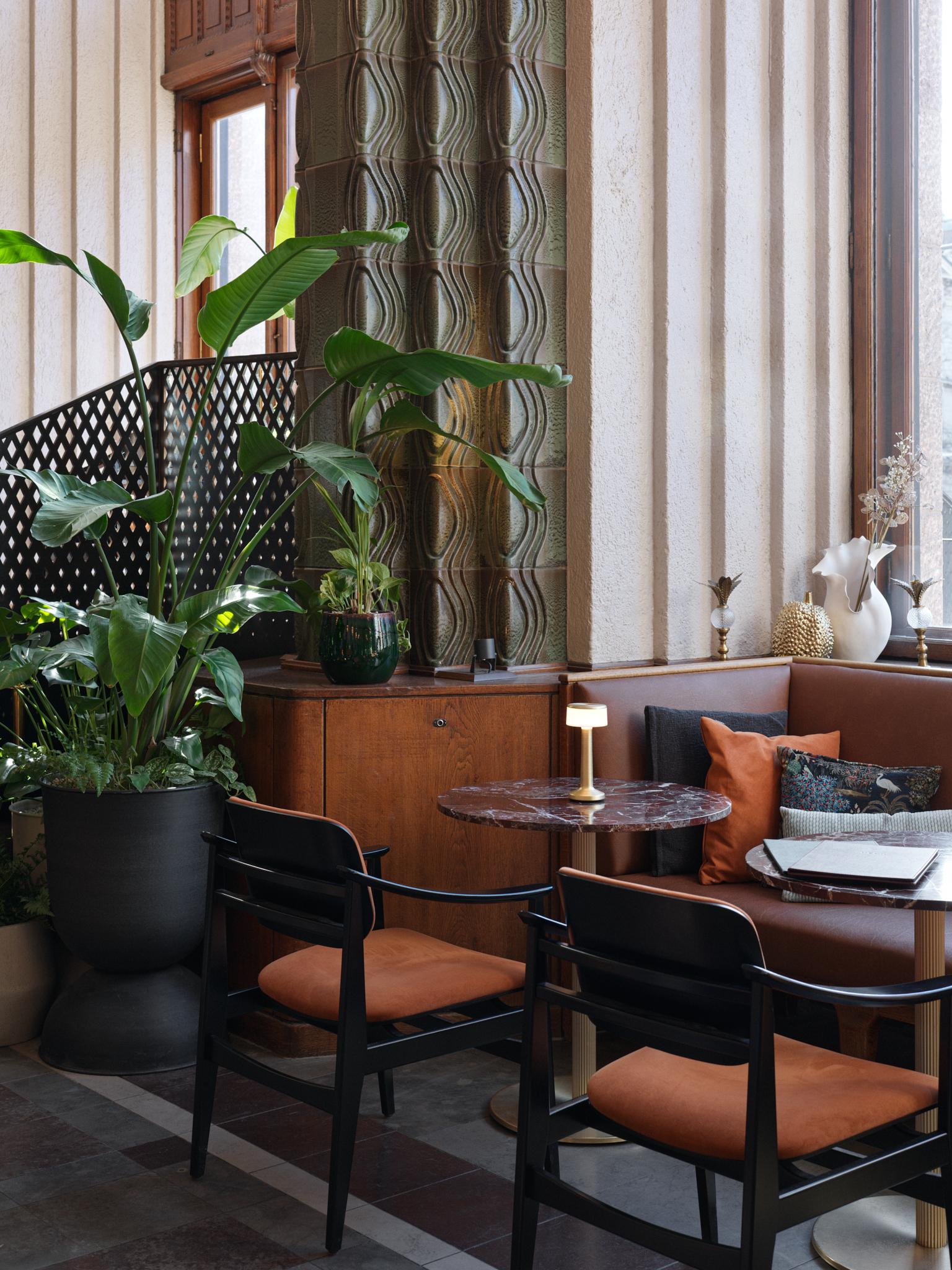
The entrance café area is open, approachable, and designed for quick and effortless service. This impression is reinforced through the interior design, which is lighter in character than the other areas, enriched by shades of green and ochre as well as materials reminiscent of Carrara marble.
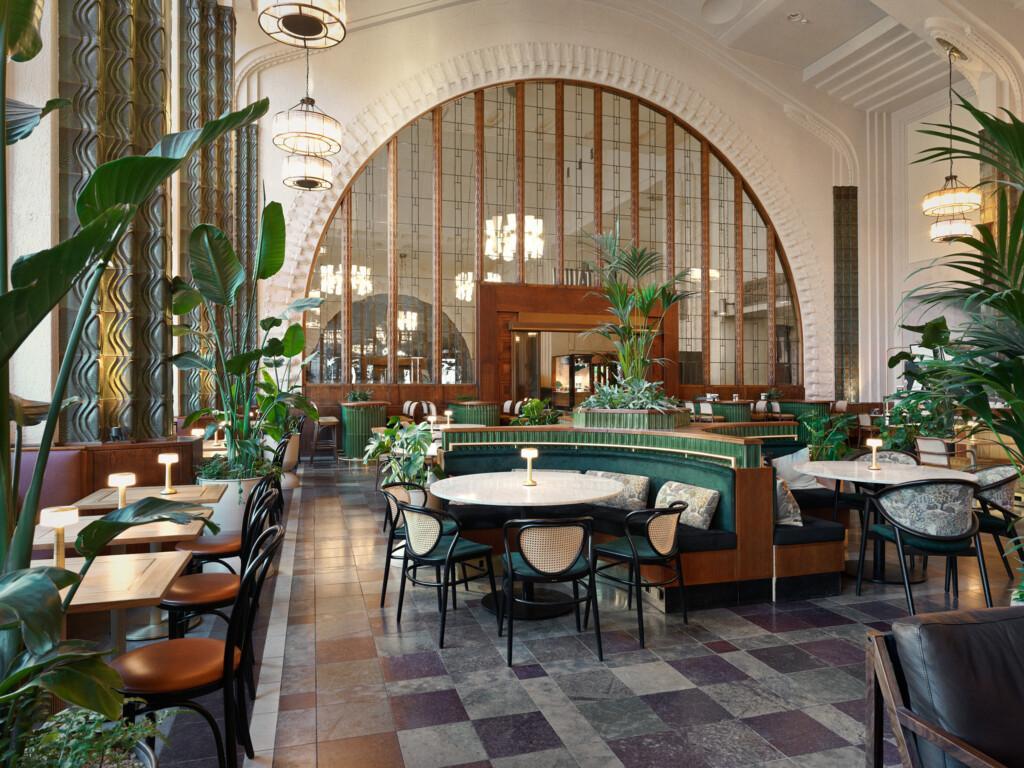
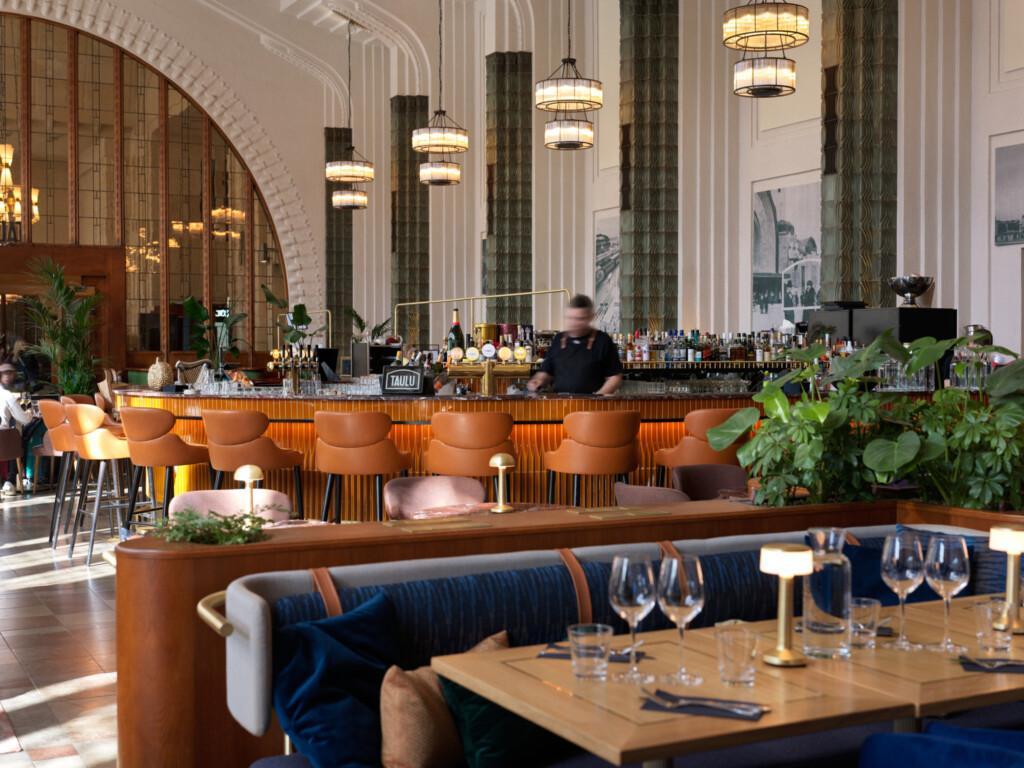
At the centre of the space, a semi-circular bar forms the heart of the restaurant. It serves as both a functional and visual focal point, emphasised through lighting and carefully selected materials.
Here, the atmosphere becomes more intimate: the palette deepens into cognac tones, brass, and darker textiles. Seating arrangements become more relaxed, inviting guests to linger and stay awhile.
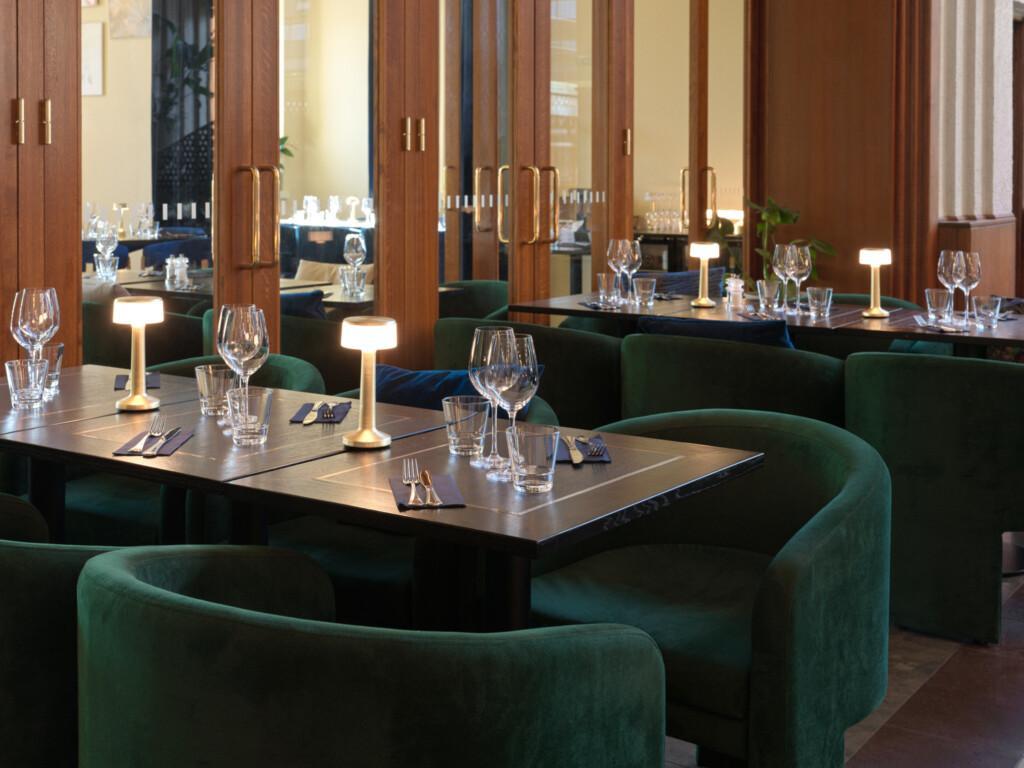
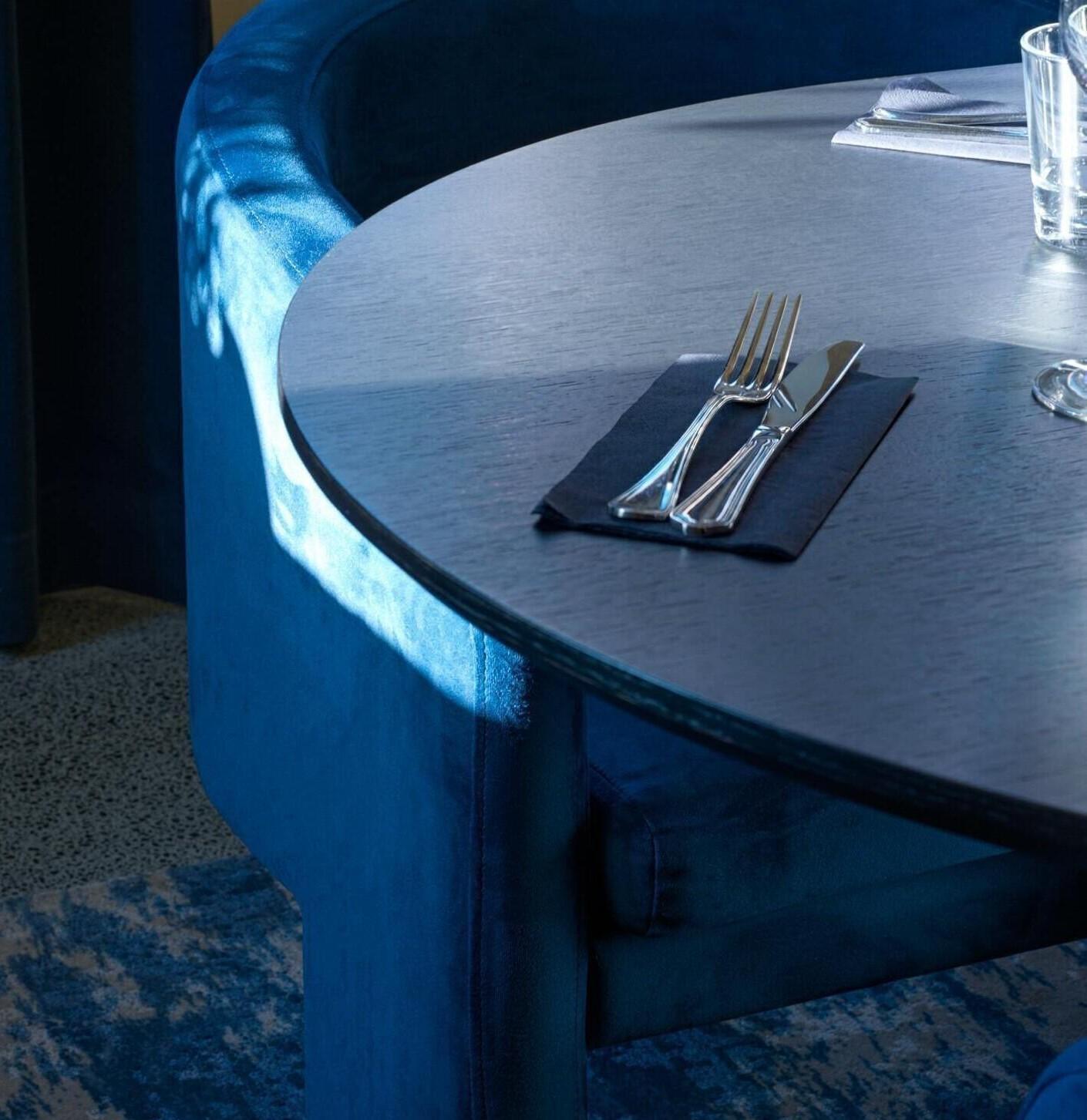
The dining room continues this transition. The colour palette deepens into muted greens, blues, and burnt ochre tones, while the atmosphere becomes calmer and more serene. The space invites guests to settle in for longer visits and provides an ideal setting for an enjoyable dining experience.
The result is an interior that feels refined and carefully crafted, while remaining warm and approachable.
Layers Across Time: Authentic Materials, Art Nouveau References, and Carefully Crafted Details
The material palette was designed to strike a balance between the building’s historical character and the present day. Rather than recreating a historical interior, the aim was to reinterpret it – creating a space that feels like a natural extension of its surroundings.
The forms and detailing draw subtle references from Art Nouveau, with organic lines, asymmetry, and shapes inspired by nature. These influences are applied with restraint in the furniture, metalwork, and finishing details.
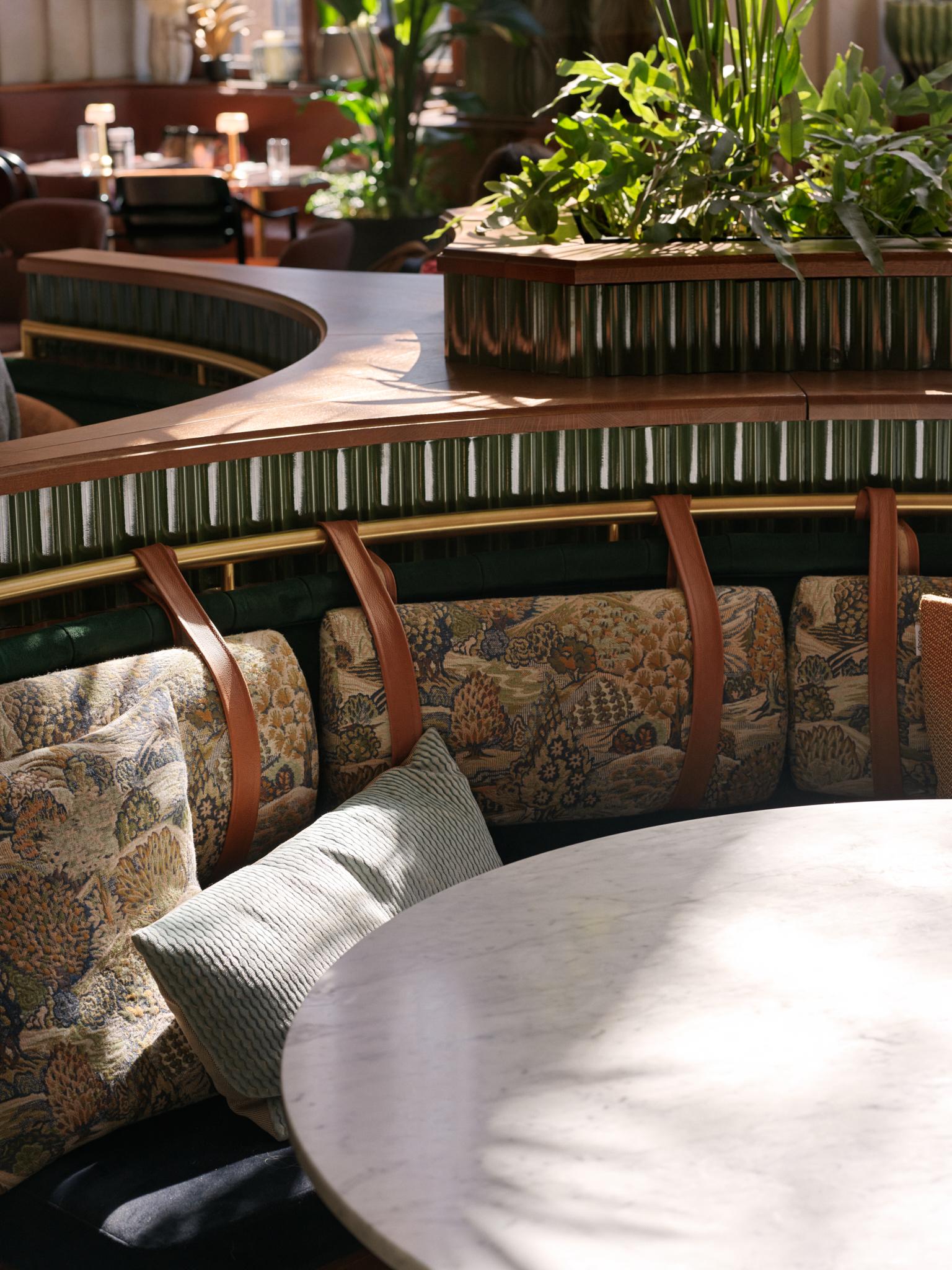
Built-in furnishings were used to create rhythm and spatial definition within the interior. They guide the use of the space and distinguish areas intended for quick visits from those designed for longer stays, while preserving openness and sightlines throughout. Carefully considered detailing – from stitching and mouldings to integrated metal elements – brings a quiet sense of craftsmanship and refinement to the overall experience.
The material detailing emphasises authentic surfaces and meticulous finishing. Wood appears in a range of tones, complemented by patinated and brushed brass that adds a sense of temporal depth to the interior. These authentic materials are chosen not only for their character, but for the way they age beautifully over time.
Light That Guides and Invites
Lighting plays a central role in shaping and structuring the space. It is used to create atmosphere, guide movement, and unify the material palette throughout the interior. The interplay of brass, stone, and tiled surfaces is accentuated by the lighting, while the central bar glows warmly as the visual centrepiece of the restaurant.
At table level, the lighting becomes softer and more intimate, creating a sense of shelter and supporting a slower, more relaxed dining experience. Pendant lights establish rhythm within the space and help tie the different zones together. Technical elements, such as speakers, have been discreetly integrated into the lighting fixtures.
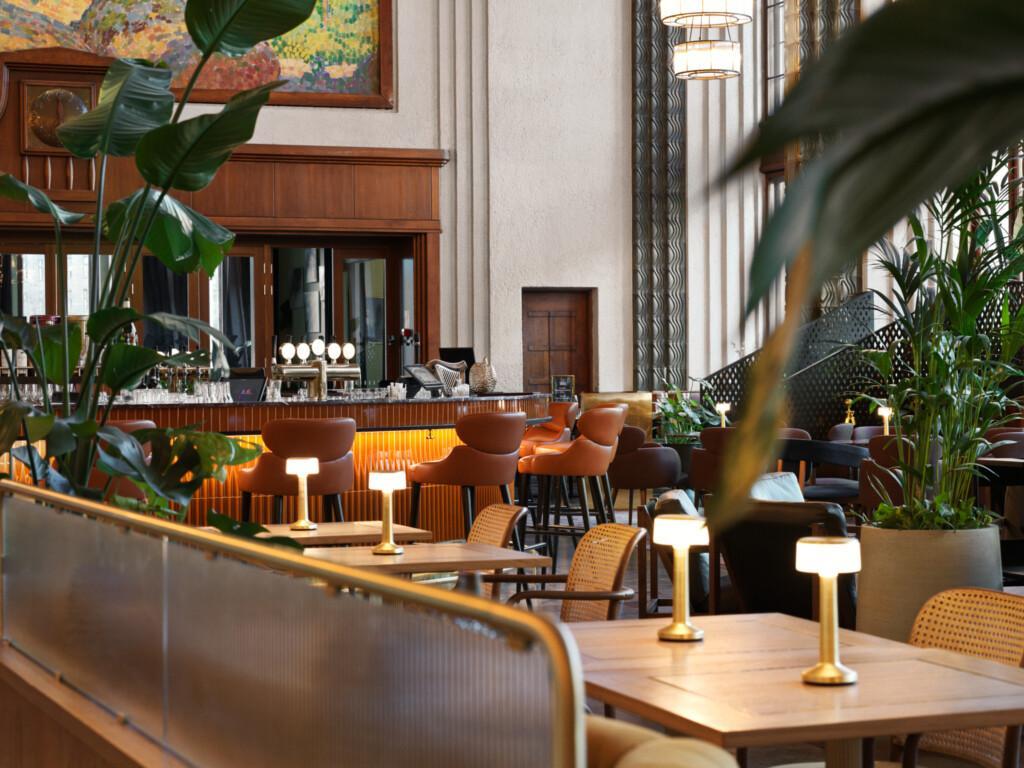
Lush and varied greenery brings freshness and vitality to the space. The planting scheme was designed to complement the building’s historical character while resonating with the landscape painting at the heart of the interior – including palms that reflect the spirit of the era.
Designed to Feel Effortless
Beyond atmosphere, intuitive spatial design was a key priority throughout the project. It was important that guests instinctively understand how the space works – where to order, where to move next, and where to settle in for a longer stay. The entire restaurant can be understood at a glance, making movement through the space feel smooth and effortless. The connection from the bar to the terrace further strengthens the natural flow between the interior and exterior spaces.
The restaurant also incorporates numerous subtle details that may not reveal themselves at first glance. These layered elements invite guests to look closer and encourage them to return again and again.
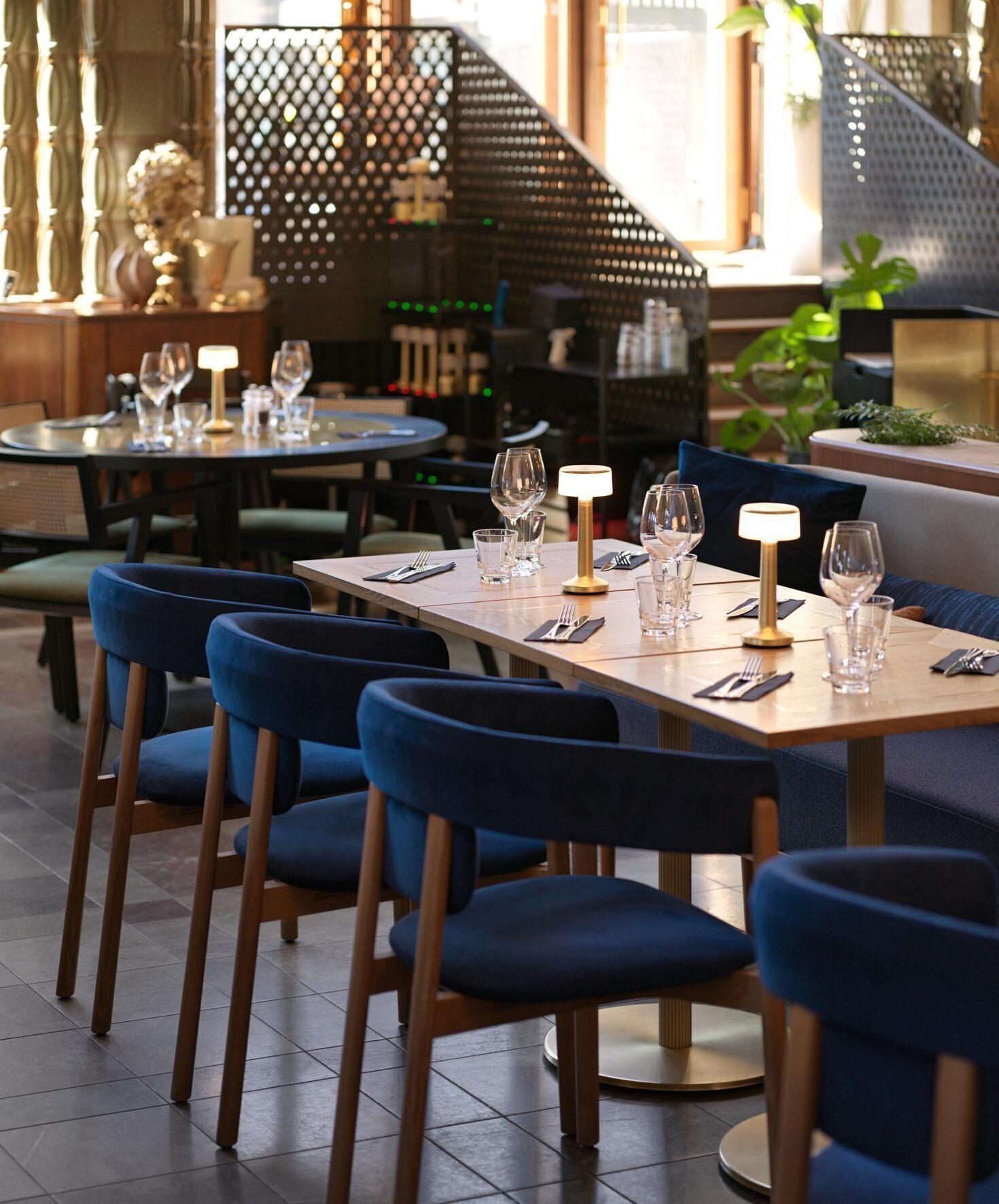
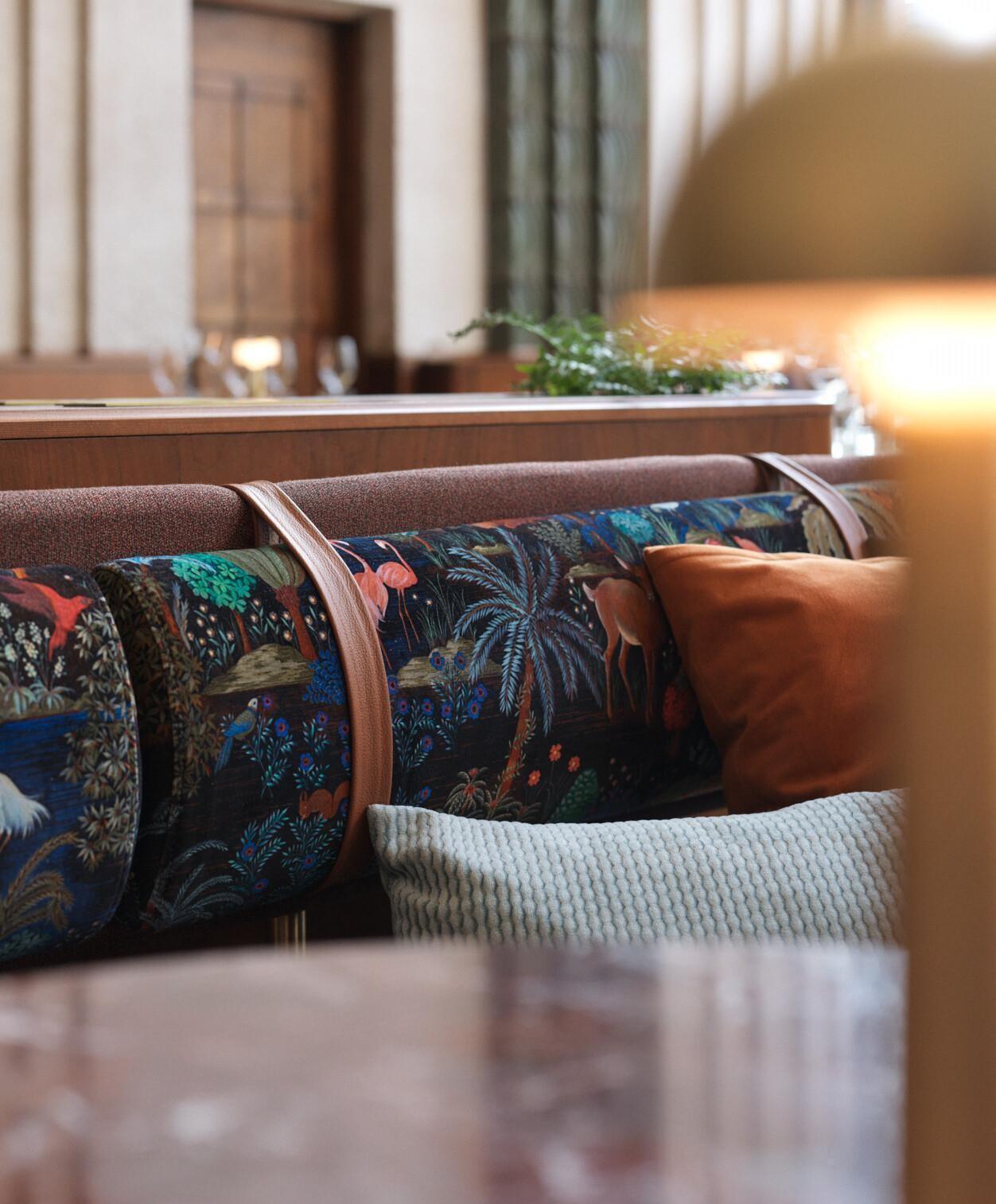
The restaurant has attracted strong interest from the moment it opened. The historic setting and the new restaurant concept have drawn in a wide range of curious visitors – locals, travellers, and passersby alike – for many of whom the space serves as a first introduction to Helsinki.
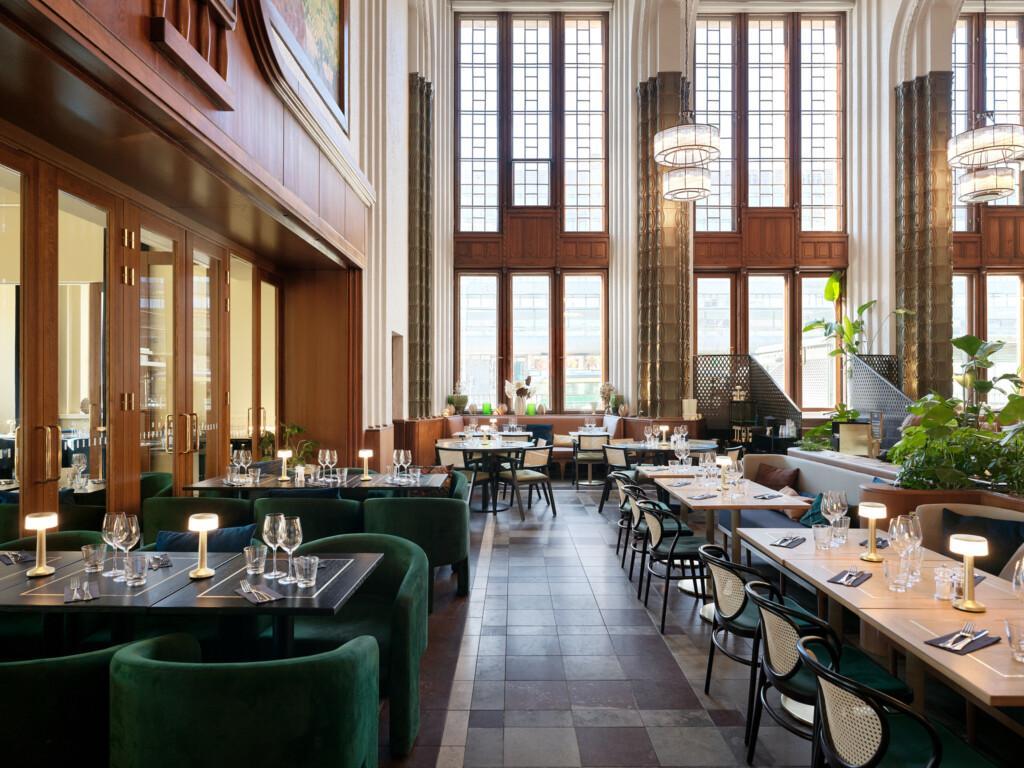
The large open space presented particular challenges in creating atmosphere. The aim was to soften the scale and introduce a sense of human warmth without compromising the original spaciousness or dignity of the interior.
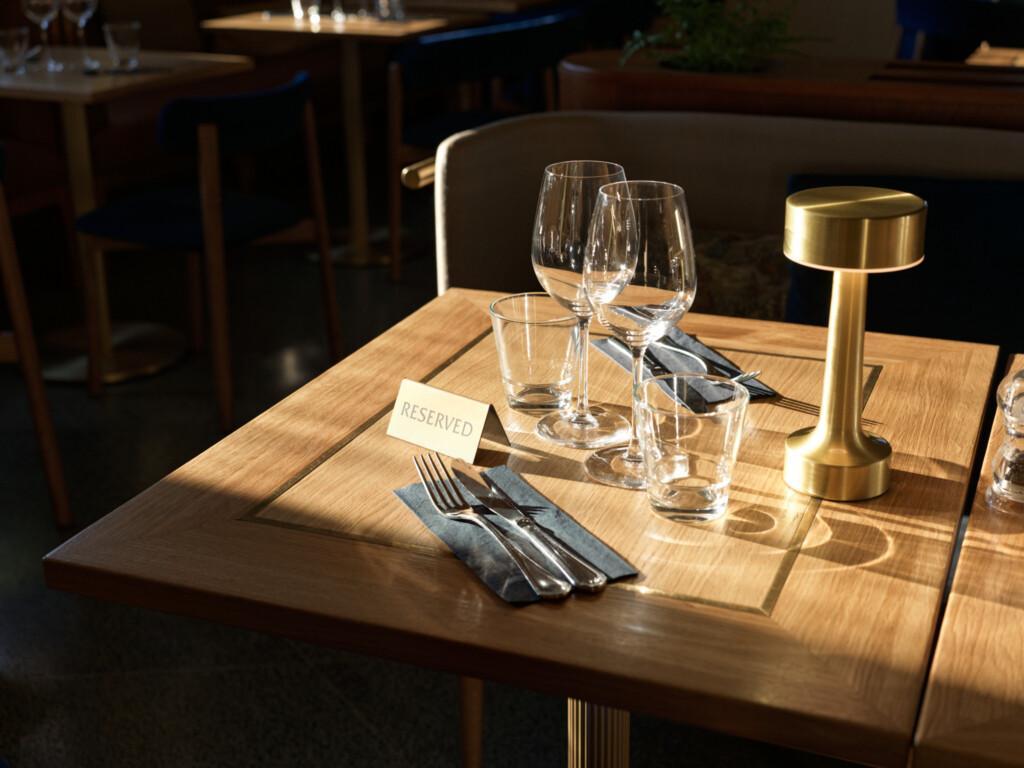
Brass, natural stone, and layered textiles create a material palette in which the building’s historic character and the present day exist in a natural dialogue.
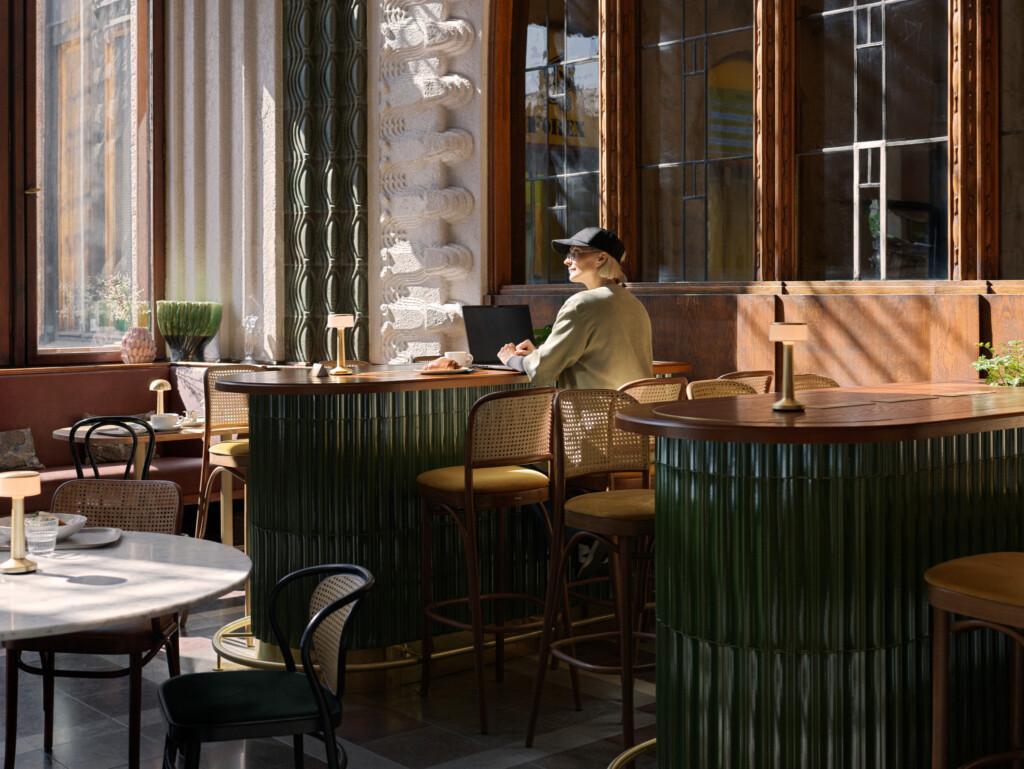
The spirit of the building’s era is given a contemporary interpretation, with subtle references to the organic forms of Jugend and Art Nouveau.
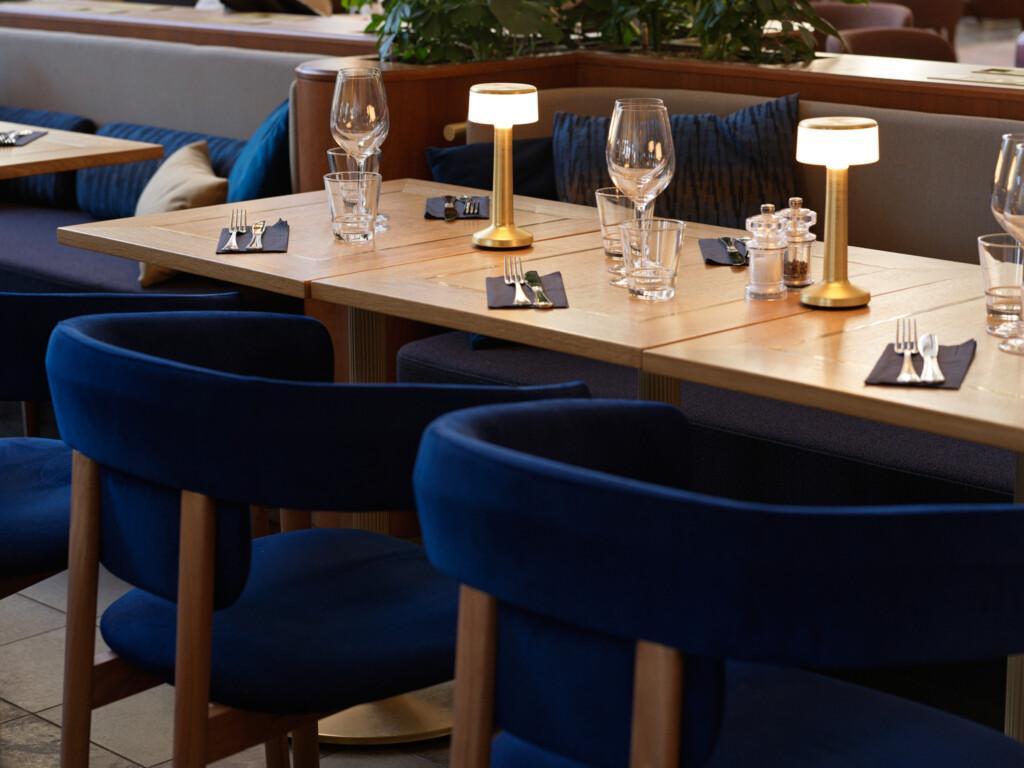
The details reveal themselves gradually – small design gestures and carefully finished surfaces create a spatial experience that feels rich and layered, rewarding the attentive observer.
facts
Subject:
A Historic Restaurant at Helsinki Central Railway Station
Customer:
Helsingin Asemaravintolat Oy
Timeframe:
2024-2026
Scale:
~650 m2 + Terrace ~200 m2
#designbyamerikka:
#SpatialDesign #InteriorDesign #RestaurantDesign #CustomerJourney #FurnitureDesign #LookAndFeel
Team
- Amerikka Design Office : Taru Leppänen, Tomi Jokinen, Sami Maukonen, Jussi Salmivuori
- Restaurant Owner: Helsingin Asemaravintolat Oy | Property Owner: VR Group
- Architectural Design: Arkkitehtuuri- ja muotoilutoimisto Talli & Arkkitehtitoimisto A-Konsultit
- Contractor: Consti | Construction Management Consultant: Berater Oy
- Fixed Furniture: RT-interiors Oy | Loose Furniture and Lighting: Restatop Oy | Textiles: Decco Interiors Oy
Top 5
- The historic setting meets the present day with subtle refinement - at the heart of the design was the ambition to transform the grand station hall into a space that feels warm, layered, and approachable.
- The carefully conserved Maisema Kolilta painting serves as the visual anchor of the space, around which the entire spatial rhythm is composed.
- The spatial concept is divided into a café, a bar, and a dining room, where the atmosphere and colour palette gradually deepen as one moves through the space.
- The materials, lighting, and detailing combine the spirit of the building’s era with a contemporary interpretation, featuring subtle references to Jugend and Art Nouveau.
- The ambition behind Restaurant Taulu was to create “the lobby of Helsinki” - a place where travellers, locals, and passersby naturally come together as part of the station’s constant movement and rhythm.
Photos Ⓒ Ville Vappula Studio
___________________________________
Does your property or concept have untapped potential?
Feel free to get in touch regardless of the scale of your project, and let’s explore together the best solution for your specific needs.
You might also be interested in
Helsinki Central Station’s EUR 60 Million Project
Gillet Bar & Bistro, Helsinki